
概要:
海南大学“一带一路”研究院兼职教授洪为民参与CGTN《对话》栏目,共同讨论香港回归28周年的发展与变化。他指出,香港IPO市场持续升温,尤其在Web3及数字资产领域吸引大量国际机构申请牌照。港交所推出第18C章,支持未盈利科技企业上市,推动AI、机器人等初创公司聚集。同时,香港正成为内地科技企业走向东盟市场的跳板,协助其重构架构、国际拓展。随着稳定币监管落地及Web3政策推进,香港正构建全球最完整的数字资产监管体系,吸引资本与人才回归。
以下为采访摘录:
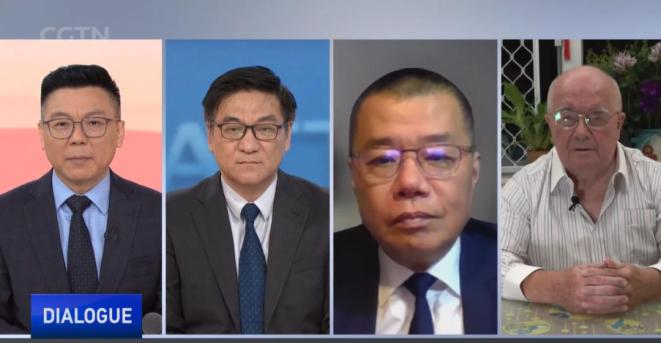
Host Xu Qingduo:Welcome to dialogue. 28 years have passed since Hong Kong returned to China in 1997. Since then, Hong Kong has been thriving as a city of culture, tech, and innovation, faithfully implementing the principle of one country, two systems.
If you look at Hong Kong now, we know that Hong Kong has been in the news, especially in recent days. The stock marketing is a performance. In particular, it demonstrates like a strong come back of Hong Kong. Is that the case?
PROF. WITMAN HUNG,Director of the Greater Bay Area Research Center China Silk Road iValley Research Institute:Yes, if you look at the IPO market obviously is booming. And I just mentioned in the area of web3, the new digital asset. There is a lot of outside parties wanting to come to Hong Kong, apply for the licenses.
We are also seeing his reflected in the search and trade numbers. Obviously, political tensions persist, and there are ongoing concerns about tariffs and negotiations. But if you just look at the first-half figures—I mean, all key numbers are going up, including GDP, exports, and IPO activity. And I'm also aware that essentially, a large number of companies lining up for going IPO later this year.
Host Xu Qingduo:John, a number of companies are lining up for IPO in Hong Kong. What draws them to Hong Kong market?
PROF. JOHN GONG,University of International Business & Economics:I think Hong Kong remains, first and foremost, a hub with abundant capital supply. So, you know, these IPOs can largely be supported by investor interest. But there's another interesting factor at play: Chinese companies are finding it increasingly difficult to list on the New York Stock Exchange and NASDAQ in the U.S. Essentially, Washington is pursuing a decoupling strategy in the financial markets.
I think many venture capital investors are increasingly seeing Hong Kong as a viable and attractive destination. One key reason is that the market here remains relatively free from political interference. Hong Kong still maintains a neutral, hands-off regulatory environment — which I believe is highly supportive of continued IPOs, fundraising, and delivering strong returns for investors.
Host Xu Qingduo:Whitman, speaking of the certainty of stability: Given the close integration between Hong Kong's economy and that of Mainland of China, particularly within the Greater Bay Area, if you look at the strong sentiment since late last year, there has been a focus on the deep-tech sector emerging in the Mainland of China. Of course, advancements in technology and innovation have significantly boosted the performance of the Hong Kong market. Isn't that right?
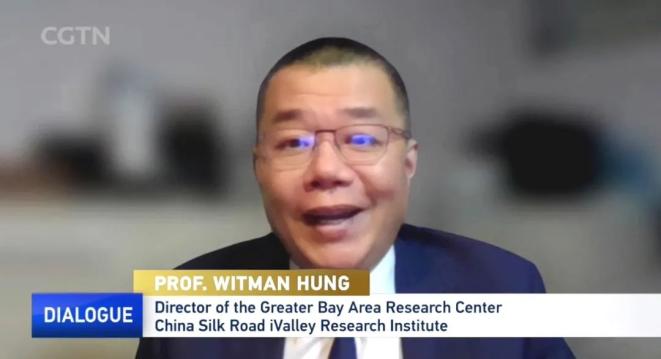
PROF. WITMAN HUNG,Director of the Greater Bay Area Research Center China Silk Road iValley Research Institute:Actually, the Hong Kong Stock Exchange introduced a new scheme — Chapter 18C — specifically targeting high-growth companies that may not yet be profitable or even have revenue. This has attracted many startups like those you mentioned, including AI and robotics firms. They're choosing Hong Kong because traditionally, IPOs required proven financials, but under this new framework, companies can list without revenue if they meet certain size and criteria. That's very attractive to such businesses.
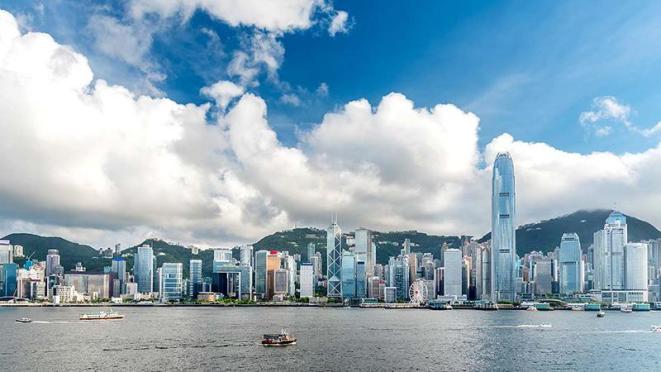
Another key point Mike mentioned — which is equally significant — is the trend of mainland midsize tech companies coming to Hong Kong aiming to access ASEAN markets. When they establish here, they restructure operations, internationalize their products, then use their Hong Kong base as a springboard into Malaysia, Indonesia, Thailand, etc. This approach has gained real traction. In fact, I see such companies weekly inquiring about setting up operations here, hiring locally, raising venture capital, and entering ASEAN markets.
Host Xu Qingduo: Hong Kong is also one of the world's first jurisdictions to establish a regulatory framework for digital assets like cryptocurrencies. For instance, after authorizing security token offerings (STOs), the city now allows companies to test stablecoin projects within its regulatory sandbox. Witman might tell us more about on that.
PROF. WITMAN HUNG,Director of the Greater Bay Area Research Center China Silk Road iValley Research Institute:Actually, the law has just been passed and will take effect on August 1st. Even though it's not yet active, there's already a lot of activity and interest from companies. You can see this in the market with major players like JD.com and Alibaba exploring different applications of stablecoins. For example, JD.com is focusing on retail and internal supply chain credit, using stablecoins as settlement tools. Others are applying them to international trade or other financial activities.
Currently, the regulatory framework clearly defines stablecoins as a means of settlement — not as an investment vehicle. However, some innovators are trying to make them more investment-friendly. Importantly, Hong Kong is the first jurisdiction globally to establish a comprehensive regulatory framework for stablecoins. While other regions like Singapore and the U.S. have partial regulations, none are as complete or coherent. Hong Kong’s approach avoids contradictions with existing laws and emphasizes gradual, systematic development over three years.
Additionally, Hong Kong recently issued its second Web3 manifesto, signaling openness to blockchain innovation. Around 70-80% of the regulatory framework is already in place, covering areas like security token exchanges. Two more laws — on OTC trading and custodianship — are pending. Once finalized, Hong Kong will become the only jurisdiction with a fully comprehensive regulatory system for digital assets and crypto. This is attracting not just investors but also companies seeking to adopt digital assets as a new financial infrastructure. Even banks, which previously avoided crypto, are now getting involved.
文章来源:中国国际电视台
图片来源:中国国际电视台
海南大学“一带一路”研究院
HUBRRI
海南大学 “一带一路”研究院在光明日报社和南京大学联合发布的“一带一路”领域全国最新专项排名中,综合实力名列全国第三。
其中,研究院的智库成果(P值)全国第三名,智库活动(A值)全国第一名,媒体影响力(I 值)全国第二名。
海南大学 “一带一路”研究院与清华大学公共管理学院研究中心、北京大学汇丰金融研究院等机构一起,于2019年底入选中国智库索引(CTTI)来源智库,并于2022年入选“中国智库索引(CTTI)高校智库百强榜”,获评为A等级智库。海南大学“一带一路”研究院并成为海南大学及海南省首个也是目前唯一一个荣登CTTI高校智库百强榜的高校智库。
海南大学“一带一路”研究院还作为中国华南地区唯一高校代表,入选“一带一路”国际智库合作委员会成员单位,成员单位包括欧盟-亚洲中心、法国可持续发展与国际关系研究所、英国海外发展研究所,以及中国财政部中国财政科学研究院、国家开发银行研究院、北京大学国际战略研究院、中科院科技战略咨询院等56家中外机构。
微信|海南大学一带一路研究院
微博|海南大学一带一路研究院
澎湃号|海大一带一路研究院
今日头条|海大一带一路
继续滑动看下一个轻触阅读原文
海南大学一带一路研究院向上滑动看下一个
原标题:《【权威观点】洪为民接受《对话》栏目访谈,论香港金融优势吸引全球资本【英文】》