
原创 John Hoffman 中国网信杂志
“
I’d like to thank the Chinese Journal of Cyberspace for its invitation to the GSMA to contribute our insights on one of the world’s most important topics – sustainable development. In this article, I discuss the critical role that digital connectivity plays in achieving the UN Sustainable Development Goals, the mobile industry’s commitments and efforts, our recommendations, and why there is an urgent need for strengthened international partnerships.
”
Future First: Revitalising Global Efforts to Empower a Better Future for All
John Hoffman
CEO, GSMA Ltd.
The 2030 Agenda for Sustainable Development, adopted by the United Nations in 2015, provides a shared roadmap for peace and prosperity for people and our planet, today and in the future. At the heart of the 2030 Agenda for Sustainable Development are the 17 Sustainable Development Goals (SDGs), which urgently call for action by all countries through a global partnership.
Underpinning the 2030 Agenda is a shared promise by every country to work together to secure the rights and wellbeing of everyone on a healthy, thriving planet. However, we are unfortunately not making the progress we should be as the world has just passed the halfway point in our collective journey towards 2030, and the SDGs are facing strong headwinds.
Natural disasters and conflicts have slowed the already faltering progress of the SDGs. Meanwhile, the cost-of-living crisis has affected economies globally, with vulnerable populations most affected by rising prices for energy and food. The UN Secretary General’s May 2024 report titled “Reinforcing the 2030 Agenda for Sustainable Development and eradicating poverty in times of multiple crises: The effective delivery of sustainable, resilient and innovative solutions” made a bleak observation - the world is not on track to achieve most of the SDGs by 2030. His report’s assessment shows that of the 140 SDG targets that have data available only about 15% are on track, close to half are showing progress but are moderately or severely off track, and more than one third have either seen no movement or have regressed below the 2015 baseline.
A fundamental shift is therefore needed – in commitment, solidarity, financing and action – to put the world on a better path. The mobile industry has an important role to play in facilitating this shift.
In this context, digital connectivity has become as a critical enabler of sustainable development, capable of driving progress across all 17 SDGs. From improving access to education and healthcare to fostering economic growth and innovation, digital technologies are transforming lives and communities around the world.
This is again echoed in the six investment pathways in the UN Secretary General’s latest report in which digital connectivity is highlighted alongside food systems; energy access and affordability; education; jobs and social protection; and climate change, biodiversity loss, and pollution as key to revitalising SDG implementation.
The GSMA, the global association that unifies and represents the global mobile ecosystem, has been at the forefront of efforts to expedite achieving the SDGs by 2030. In 2016, the GSMA led the mobile industry to become the first industry to collectively commit to all 17 SDGs, and since then has monitored its progress through the annual Mobile Industry Impact Report: Sustainable Development Goals (SDG report), demonstrating the mobile industry's collective commitment to sustainable development and proactive approach to engaging with sectors and governments worldwide to drive practical actions.
Progress and Challenges in Achieving SDGs
In 2015, when the world first adopted the 2030 Agenda for Sustainable Development, the mobile industry’s average SDG impact score stood at 33, achieving 33% of what it could potentially contribute to the SDGs. By the start of 2023, our industry’s average impact score across the 17 SDGs rose to 53, demonstrating significant progress. Notably, we have witnessed substantial improvements in contributions to SDG 4: Quality Education, SDG 6: Clean Water & Sanitation, and SDG 7: Affordable and Clean Energy. These advancements can be attributed to the increasing number of people who rely on mobile technology to access educational resources, and interact with government services.
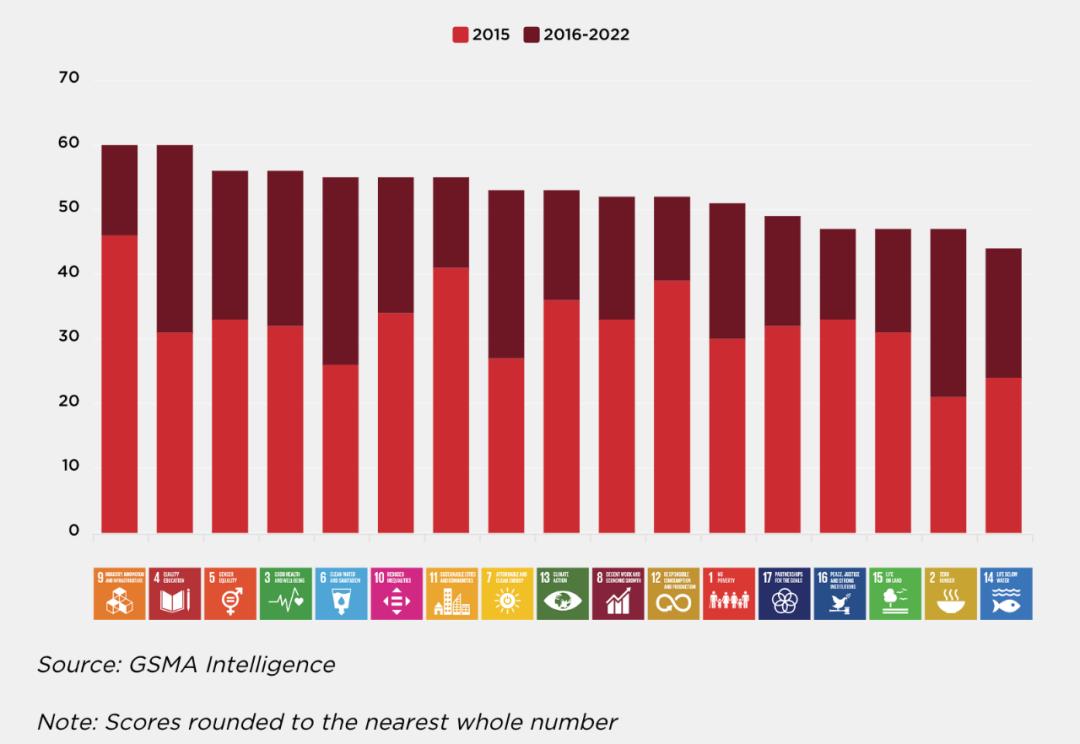
Figure 1: SDG mobile impact scores
The mobile industry’s biggest impact continues to be in SDG 9: Industry, Innovation and Infrastructure, driven by the widespread reach of mobile networks, constant investments in the rollout of 5G and network upgrades to bring more people online across the world. By the end of 2023, 5.6 billion people (69% of the global population) subscribed to a mobile service, representing an increase of 1.6 billion people since 2015. Growth in mobile internet penetration has been even faster. At the end of 2023, 58% of the world’s population used mobile internet, equating to 4.7 billion users – an increase of 2.1 billion since 2015. This remarkable progress also revealed another remarkable correlation in our analysis – countries with a higher mobile connectivity score perform better on the SDGs.
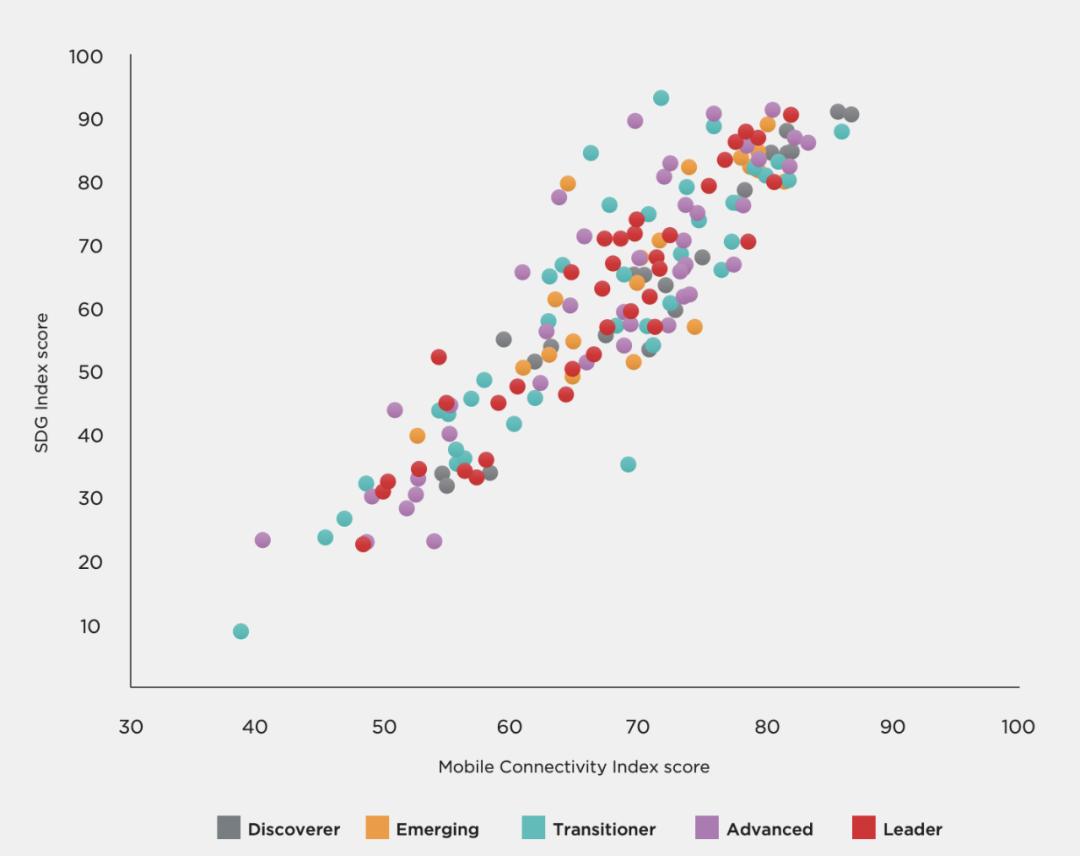
Figure 2: Countries with high mobile connectivity index scores do better on the SDG index
While we remain optimistic about the potential impact we can achieve, we cannot take progress for granted. Challenges remain in achieving the SDGs, particularly in the context of digital connectivity.
Access
Despite tremendous efforts to expand mobile networks and broadband access by the industry, usage gaps remain particularly in rural and remote areas. Building and maintaining infrastructure in these regions is often cost-prohibitive and suffers from a lack of enabling policy environment. Only 5% of the world’s population are not covered by a mobile network, but a larger problem exists with 38% of the world’s population covered by mobile broadband who for a range of reasons do not use mobile internet services.
Affordability
Affordability of digital devices and services is another major barrier. For many low-income households, the costs of smartphones and internet services remains high. Addressing affordability issues is essential to ensuring that all individuals can benefit from digital connectivity. Through the Handset Affordability Coalition, the GSMA works with partners to address this challenge.
Digital Literacy
Today more than 3 billion people worldwide are not using mobile internet, despite being within the footprint of a mobile broadband network. Affordability, as mentioned above, remains a key barrier, yet a lack of the essential digital skills required to use mobile internet as well as awareness of internet use cases prevent the unconnected from using and benefitting from mobile internet. Enhancing digital literacy through education and training programs is vital for promoting digital inclusion.
To address this barrier, the GSMA developed the Mobile Internet Skills Training Toolkit (MISTT). MISTT is a set of free resources for teaching people the basic mobile digital skills they need to access and use mobile internet. The toolkit uses a ‘train the trainer’ approach and consists of short lessons available in PDF and video format that can be easily adapted to local needs and languages and delivered to customers in a range of different ways.
Regulatory and Policy Challenges
Regulatory and policy frameworks also play a significant role in shaping the digital landscape. Inconsistent and imbalanced regulations, restrictive policies, disproportionate levels of taxation, high spectrum cost and bureaucratic hurdles impede the deployment of digital infrastructure and services. Creating enabling environments through supportive policies and regulations is essential for fostering digital innovation and inclusion.
GSMA Recommendations to the Global SDG Development
Digital connectivity is a powerful enabler of sustainable development, with the potential to drive progress across all 17 SDGs. By closing the digital divide, we can unlock opportunities for education, healthcare, economic growth, and more, ensuring that no one is left behind.The GSMA proposes several actions for both governments and industry to further support the achievement of the SDGs:
1.Reforming Policy to Support Sustainable Investment.
Recommendation: Governments should empower industry with incentivising policies to sustainably invest in expanding mobile broadband networks, particularly in underserved and remote areas. This includes strengthening 4G and deploying 5G infrastructure to enhance connectivity and support innovative applications.
Impact: Expanding network coverage ensures that more people can access digital services, which is crucial for inclusive development. Enhanced connectivity supports applications in education, healthcare, and economic activities, driving overall societal progress.
2.Promote Digital Literacy and Skills Development.
Recommendation: Implement comprehensive digital literacy programs to educate individuals, especially young people, on how to use digital technologies effectively. This includes partnerships with educational institutions and international organisations to provide training and resources.
Impact: Enhancing digital literacy empowers individuals to leverage digital tools for education, healthcare, and economic opportunities. Skills development is essential for creating a digitally savvy population capable of contributing to and benefiting from the digital economy.
3.Support Innovations for Sustainable Development.
Recommendation: Encourage and support the development of innovative digital solutions that address specific SDG challenges. This includes investing in startups and young talents who focus on sustainability, health, education, and financial inclusion.
Impact: Innovative solutions can drive significant progress in achieving the SDGs by providing targeted, effective interventions. Supporting innovation ensures a continuous pipeline of new ideas and technologies that can tackle pressing global issues.
4.Foster International Partnerships and Collaboration.
Recommendation: Leveraging the role of the international organisations, such as the GSMA; UN agencies, such as the ITU; and multilateral development banks to prioritise investment in digital development.
Impact: International partnerships leverage the strengths and resources of different organisations and countries, creating global synergies that enhance the effectiveness of initiatives aimed at achieving the SDGs. Collaborative approaches are crucial for addressing complex global challenges that require coordinated efforts.
Supporting Global Youth in Achieving the SDGs
Youth are critical to the success of the SDGs, as they represent future leaders, innovators, and change-makers. Empowering young people with digital skills and opportunities is essential for driving sustainable development.
GSMA's mPower Youth Initiative
The GSMA's mPower Youth Initiative, in global partnership with UNICEF, is designed to drive mobile operator actions to support young people’s rights, safety, and well-being in the digital age and support them in leveraging digital technologies to achieve the SDGs.
Key Aspects of the mPower Youth Initiative include:
Protection and Safety: The initiative emphasizes the importance of online safety, protecting children from potential abuse, exploitation, and harmful content.
Digital Inclusion and Literacy: mPower Youth promotes digital literacy, ensuring that children can safely and effectively use mobile technology to access educational resources, health information, and other essential services.
Economic and Social Empowerment: The initiative supports the economic livelihoods of young people by enabling access to mobile technologies that foster entrepreneurship and job opportunities.
Partnerships: GSMA collaborates with key partners like UNICEF and mobile operators globally to drive the initiative with best practices and guidance to expand the impact of the initiative.
Mobile Industry’s Contributions to the SDGs in China
When it comes to digital connectivity, China has made tremendous contributions to the global mobile industry ecosystem. China hosts the world’s largest 5G network with a vibrant connectivity ecosystem at the forefront of digital innovations. For example, the GSMA’s Open Gateway API initiative is opening innovative network sharing capabilities, delivering globally interoperable services such as 5G messaging and new calling.
The Chinese mobile industry is also accelerated its impact on the SDGs. In the 2023 report, SDG 6 (Clean Water & Sanitation) and SDG 4 (Quality Education) scored highest in the country, driven by rising mobile internet adoption and use, as well as the growing uptake of IoT solutions.
SDG 6 focuses on ensuring the availability and sustainable management of water and sanitation for all. In China, the mobile industry is driving the deployment of smart solutions leveraging 5G IoT, and leading the commercial deployments of 5G Advanced and RedCap technologies to further enhance 5G IoT capabilities.
SDG 4 seeks to ensure inclusive and equitable quality education and to promote lifelong learning opportunities for all. SDG 4 is the most improved SDG in China since 2015. Mobile operators in China have played a crucial role in developing the digital infrastructure required to access online educational resources. They have also contributed to the development of digital tools in education. For example, in early 2023, the Ministry of Education in China renewed strategic cooperation agreements with China Mobile, China Telecom and China Unicom. In the coming years, the Ministry of Education and the three operators will deepen strategic cooperation in building a smart education platform, promote digital management in education, improve teachers’ and students’ digital literacy and skills, and push ahead with reform in education evaluation, among other activities.
SDG 7 aims to ensure access to affordable, reliable, sustainable and modern energy for all. The mobile industry in China continues to make progress on using clean energy and reducing carbon emissions. One of the key challenges to overcome in decarbonising the mobile sector is access to renewable electricity. Operators in China are increasingly switching to renewable electricity sources and exploring green networks to fight climate change issues.
Final Thoughts
The GSMA's ongoing commitment to the SDGs and the recommendations provide clear guidance for the mobile industry to continue its transformative impact. As we move forward, it is essential to maintain a focus on closing the digital divide, enhancing digital literacy, and fostering innovation. The mobile industry's efforts, guided by the GSMA, will be instrumental in driving progress towards the SDGs and ensuring that the benefits of digital connectivity are accessible to everyone, everywhere.
The 2024 GSMA SDG Impact report will be published in September 2024 during the United Nations General Assembly, and we will be hosting important discussions with both governments and private sectors not only from China but across a diverse portfolio of stakeholders from Asia, Africa, Middle East and Latin America at MWC Shanghai 2024, 26 -28 June.
There is an urgent need to release the untapped potential of the mobile industry, as countries with higher rates of digital connectivity will achieve greater SDG impact. I invite you to join hands with the GSMA and the mobile industry to unleash digital connectivity’s vast potential, because together, we can drive positive change, empower communities and create a sustainable future by unlocking the power of connectivity and creating a better future for all.
原标题:《GSMA CEO John Hoffman:Empower a Better Future for All》