
原创 CAI Yutian 中国投资参考
Cover Stories
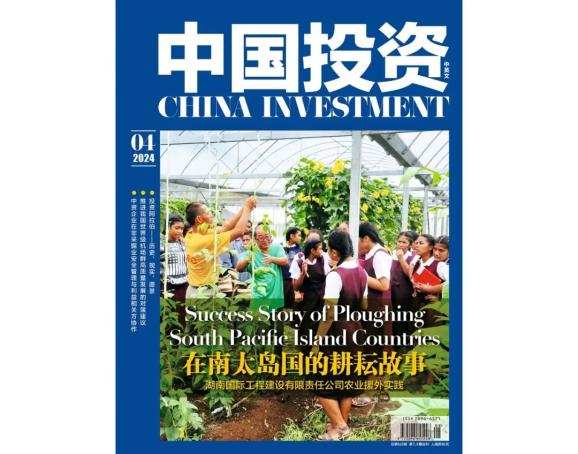
Success Story of Ploughing South Pacific Island Countries
● Success Story of Ploughing South Pacific Island Countries——Notes on Agricultural Foreign Aid Work of Hunan International Engineering Construction Group Co / Tang Xiyuan
● Down-to-earth: Characteristics of Chinese Agriculture Aid——Interviews with official representatives in Tonga and the Federated States of Micronesia / Cai Yutian, Huang Kailun and Tang Xiyuan
● "Increasing Local Residents’ Income and Improving Their Living Standard"——Interview with Representatives of Agro-Tech Aid Project Experts in Federated States of Micronesia/ Huang Kailun, Song Rui and Tang Xiyuan
● Combining Teaching with Aiding , Collaboratively Supporting Livelihoods in the South Pacific——Interview with farmer and student representatives in Tonga and the Federated States of Micronesia / Song Rui and Tang Xiyuan
● Minor Ecology of Major Effect——Application and Promotion of Clean and Recycling Agricultural Model Featuring “Pig-Biogas-Vegetable” in South Pacific Region / Cai Yutian and Tang Xiyuan
By
CAI Yutian, HUANG Kailun China Foreign Affairs University
TANG Xiyuan Editorial Office of China Investment - China Foreign Affairs University
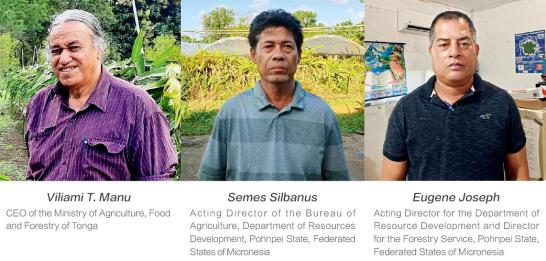
As the epitome of China’s foreign aid projects, Hunan International Engineering Construction Co.,Ltd (HIEC) has been deeply involved in aiding the agricultural fields of Tonga and the FSM for many years. It is not only popular among the masses, but also has received praise from the local government. In order to have a more systematic and in-depth underdstanding of the effectiveness of the HIEC and China’s aid to Tonga and the FSM, this magazine specially interviewed Viliami T. Manu, CEO of the Ministry of Agriculture, Food and Forestry of Tonga; Semes Silbanus, acting director of the FSM Agricultural Bureau, Eugene Joseph, director of the FSM Forestry Bureau and acting director of the Department of Resources & Development, looks at Chinese aid from the perspective of local officials.
Long road ahead: Dilemma of agricultural development
China Investment: We’ve learned that agriculture, fishery and tourism are the pillar industries in your country, of which agriculture is the top priority. Based on this, can you give us an overview of local agricultural development? What is the traditional type of agriculture and what are the main crops or product?
Viliami T. Manu:Agriculture is a big part of Tonga food production. 65% of families have some crops or other agricultural products grown by themselves. But the number of fully commercial farmers is still small. One reason is some households grow mainly for family consumption and another reason is there are many farmers grow vanilla, kava and pineapple, which are not for export, so they are not counted. Root crop is the most important agricultural product in Tonga, yam, taro, cassava, sweet potato are the common kinds. Livestock in Tonga are mainly pig and poultry. Watermelon is the most important export agriculture product. The export market is stable, but only few farmers can make money from it, so the number of households growing for export has been reduced from 60 to 30.
Semes Silbanus: Our agriculture in Pohnpei is good but not good enough. Our main crops include yams, taro, sakau, banana, coconut and breadfruit.Traditionally people in Pohnpei plant crops in jungle such as yam and sakau.
China Investment: What is the proportion of farmers in the employed population in your country? What about the age distribution? Compared with other employed persons, what is the level of the income of farmers?
Viliami T. Manu:In Tonga, most of the farmers are old, young people are more likely to work overseas rather than farm. So at this stage, training and educating are very important. Now we have two agricultural education institutions, students are able to earn degrees and diplomas in agriculture from there. China Agricultural Aid Project established a long-term cooperation with local schools, they provided agronomy practice base for students, which made a great contribution to cultivating a new generation of young farmers in Tonga.
Semes Silbanus: In Pohnpei only a few people go in for farming as a profession, most people plant some yams, sakau only on weekends, It’s not easy to make a living solely from agriculture.
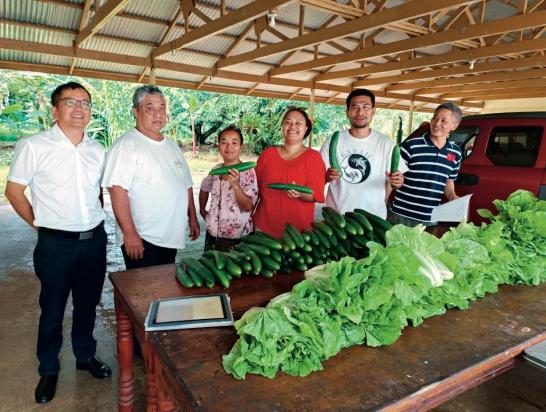
⬆ Handing over produced vegetables to the Bureau of Agriculture
China Investment:Nature is closely related to humain. Agriculture is actually an industry dependent on the weather, and the natural environment has a big impact on the upper limit of agricultural economic development. What do you think of the assistances and restrictions for natural conditions to local agriculture? Is there any restriction has already been solved?
Viliami T. Manu:Traditional agriculture in Tonga has no irrigation. When the drought is severe, as it was last year, the damage is significant. Local farmers realize they need irrigation. But when the weather back to normal, they forget all of it again. We need more trainings and infrastructures for irrigation. China Agricultural Aid has been demonstrating rainwater collection and irrigation for a long time, which filled the needs of our farmers.
Eugene Joseph: We don’t have much land suitable for mass production of agricultural products as in China. What is more, we have a rainy climate which hampers agricultural production. The Chinese pilot farm team is promoting farming in greenhouses which is a good option of alleviation of the restriction.
China Investment:In recent years, by explorating new technologies and new models, has the type of agricultural economy in your country changed? If so, what is the new type and what are the characteristics?
Viliami T. Manu:Fertilizer is new to us, but farmers need to learn how to use it in the right method and amount. Tongan export now depends on watermelon and squash, by using fertilizer, it will take only 3 months to be ready to harvest. The production process is also standardized, which is really suitable for export.
Eugene Joseph: Yes, the local farmers are changing their way of farming, they realized the importance of mass production and efficiency of input. They build their own greenhouses, mulch the plots, using more organic fertilizers that are learnt from the Chinese experts.
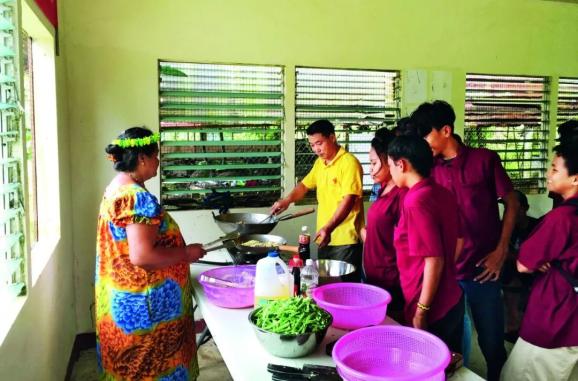
⬆ Culinary training by Chinese expert
Down to earth: Solutions by Chinese aid project
China Investment:As for the Greenhouse Vegetables and Biogas Technology introduced by HIEC, do you think they have actual effects to improve the living conditions of local farmers, such as income, living environment and diet structure?
Viliami T. Manu: Traditional Tongan way of agriculture is shifting, by using “pig-biogas-vegetable” agriculture model, we can grow on the land all year round. Biogas is also new to Tonga. The natural gas is very expensive in Tonga. Using biogas can bring down live expenses for normal households. The “pig-biogas-vegetable” agriculture model has almost no waste, it is totally environment friendly. Our traditional diet lacks vegetables, the growing of vegetables bring Tongan a healthier diet.
China Investment: As far as we know, HIEC has successfully helped to establish a batch of Secondary Demonstration farms to promote the “pigs-biogas-vegetables” eco-cycle organic agricultural mode. In your opinion,what makes this mode be popular? In what aspects does it meet the local conditions and needs?
Viliami T. Manu:The biggest benefit is this mode allows farmers to earn more money, that’s the reason. From my understanding, in the “pig-biogas-vegetable” agricultural system, the most money comes from vegetables, which can bring in income every day. Pigs are both food and money. The main function of biogas is to reduce the living cost.
Eugene Joseph: I think this production mode suits the real conditions in Pohnpei, for example, the greenhouse can prevent the rain from washing away the fertilizers, save up resource by using biogas, and help protect the environment by fermenting the wastes of pigs,which also avoid the wastes flowing directly to the open field and contaminating the water resources.
China Investment:HIEC has made a lot of efforts to promote agricultural technology, such as collabrating with your Agriculture Bureau, making some simple press and publicity materials specially such as biogas use directions and posters of Safety Instructions. What do you think of the work of the Chinese foreign-aid experts?
Viliami T. Manu: Very very well and good. For the vegetable growing and pig raising, Tongan have some basic knowledge. But biogas need some extra knowledges and skills, Chinese experts have made a lot of efforts in training. The King also visited the Chinese experts’ booth in the Agriculture Show many times.
Semes Silbanus: The local people are grateful to the Chinese expert team who are hardworking and they teach the local people real expertise.
China Investment:HIEC has also built locally Seedling Breeding Institution and Pig Artificial Insemination Stations, where the localization of crop seeds and technicians are gradually realized. Do you think the localization is necessary? In what ways it works?
Viliami T. Manu:The seedling breeding and AI for pig still on its way to publicity. By using traditional ways of growing vegetables and raise pigs, very few farmers can make money. The introduction of new knowledge and skills can let more people make money through agriculture.
Semes Silbanus: The nursery and AI station are popular among local farmers. The purpose and aim of pilot farm is to promote the Chinese agricultural technologies in the FSM. I think only after the local people master the technology can the technology be applied to mass production and rooted in the farming communities.
Make steady progress: Model of bilateral cooperation
China Investment:China-FSM have cooperations in fishery, tourism, infrastructure construction, education and so on. Do you think China’s assistance is pertinent? Can you give us some specific examples?
Eugene Joseph: I think the assistance is relevant, we have abundant fishery resources but our country does not have the matching fishing capacity. Chinese companies also built highways and bridges for us, which are urgently needed here.
China Investment: China-Tonga have cooperations in fishery, tourism, infrastructure construction and other domains, there is also regular Foreign-Aid training in different fields, which your trainees will trained in China. We want to know the current employment situation of these trainees, whether they can help Tonga in the corresponding area?
Viliami T. Manu:Now the Tongan students on scholarship in China is about 80-100. They all gonna receive formal degrees in China. Many students studied Global Health Studies in previous year, now there are more students study different majors, like agriculture, pedagogy and philosophy. When students who studied abroad return to Tonga, half of them work in ministry of education. The rest goes all over the country and contributes to various sectors.
China Investment:We have seen some local students and farmers participate in the Open Day activities such as “Experience China” and “Agricultural Products Cooking Show”, which were organized by Chinese Embassy. What do the local people think of the Chinese aid? What about their acceptability of these assistances?
Eugene Joseph: The local people, students or farmers, they like participating in these activities where they learn somethings that are helpful to their specific need. Overall, it has a good response among the people.
China Investment:We have noted that China has assisted community livelihood projects such as fishing boat engines, sewing machines and stoves training for women. What do the local people think of the China-Aid? What about their acceptability of these assistances?
Viliami T. Manu:The most impressive thing to me is the training of women. In traditional Tongan farming, women were not counted. But as more and more home gardens appeared in Tongan family, women became farmers. That was a new phenomenon. I have statistics from some financial institutions, 99% of their loans go to women’s groups. They told me that compared to men, women’s groups are more cooperative and persistent, they prefer women’s groups to men’s. The Chinese Technical Team provides training for women’s groups, give them free vegetable seedlings for home planting. They also provide technical services for community plantations, contributing a lot to home-growing for women’s groups.
China Investment:Is there any domestic or international resistance in the process of cooperation between the two countries? Has it been solved? If so, how does it work out? If not, what are the obstacles?
Viliami T. Manu:Skills and infrastructure all can be solved by government train and investment. The most important thing is people’s ability to accept new things, We know that changing perceptions take time. We shall be patient until we can see more results.
Eugene Joseph: Yes, there are some concerns among some politicians, but most local people don’t care much about politics, they welcome assistance, whether is from China or from any other countries.
China Investment:Do you think your country need to provide policy support or facilitation measures for Chinese foreign aid enterprises/aid teams? Are there already any specific preferential policies or incentive measures in some collaborative fields?
Viliami T. Manu:China-Aid is more than welcomed in Tonga. The King have visited Chinese demonstration complex both in Nukualofa and Vava’u for many times. After years of promotion, we can now see dragon fruit in the market. However, more work need to be done to promote the Chinese agricultural mode.
Eugene Joseph: So far there aren’t such specific measures nor relevant policies, but I hope our leadership will do so for the benefit of our people.
China Investment:As for the mode, content and scale of the cooperations with your country in various fields, what are the differences between China and other assisting countries? What are Chinese experience and characteristics?
Viliami T. Manu:For the Chinese project, all the experts in the team work on the field full time. For most of the project from other countries, they only work for a short time. They can make big report, but they only work for small time. The Chinese project surpass them on all level.
Eugene Joseph: The Chinese like to assist us in developing our infrastructure, constructing stadiums, highways, bridges, etc., which can be so tangible. I think maybe this is how China develops.
A bright future: Road to Mutual Benefit
China Investment:After years of efforts, your farmers have fulfilled the reduction of household spending costs and Tonga’s Foreign Exchange Earning has also increased. What are your expectations for the future development of local agriculture?
Viliami T. Manu: In Tonga, the richest farmers are all vegetable famers. Using traditional farming methods, they need to shift land every 6 months, only 25-50% can be put into use every year. Now we have agricultural technology aided by China, with the use of biogas residues, farmers can use 100% of the land all year round.
Eugene Joseph: Some local farmers really benefit a lot by applicating the Chinese technologies to their farming. As for the future development, we hope more Chinese enterprises like HIEC can come to assist us, in the field of livestock farming, poultry, etc.
China Investment:As for the current development situation of your country, what are your expectations on the areas and forms of the future overall economic development to your country?
Viliami T. Manu:We still need to import a lot of meat every year. Increasing local meat production is very important to us. In order to make it happen, poultry farming is the most important thing to do. The poultry farming component of the fifth and sixth phases of China-Aid Project provides much support for this goal. We have some beef shops, but there are not enough butchers in Tonga, which makes the supply of beef unstable. Pig farming has not yet formed a large scale, I believe China-Aid can helps us a lot.
Eugene Joseph: In addition to agriculture, we also hope our processing industry can furthrt develop with the assistance of Foreign-Aid, this is also an urgent problem for us.
China Investment:The last question, this year is the 26th anniversary of the establishment of diplomatic relations between China and Tonga(35th anniversary between China and the FSM), and the cooperation show a steady trend of improvement. In your opinion, what is the prospect of Sino-Tongan (Sino-Micronesia) cooperation? What other areas of cooperation can be rolled out?
Viliami T. Manu:I strongly recommend the continued development of biogas system in the seventh phase of China Agricultural Aid Project. I have sent the request to Chinese embassy in Tonga yesterday. I also believe the tissue cultivation and soil content analysis lab can help us a lot. There is also an “1 million trees planting” schedule for next 10 years, after I heard the explanation from coconut experts, I realized that the management for coconut tree plantation is very urgent. We will optimize the coconut trees according to the ten-year development plan formulated by Chinese experts.
Eugene Joseph: As I just said, China can play an important role in assisting the FSM in developing our processing industry, process the local products such as banana, breadfruit, yams etc., which are the substitutes for the imported food and can also ensure the food security.
Translator | Lu Jieyu and Cai Yutian
Design | Demi

本文刊于《中国投资》2024年4月号
版权所有,侵权必究
欢迎个人分享,媒体转载请回复本微信号获得许可
《中国投资》杂志创办自1985年,由国家发改委主管,国家发改委投资研究所、中国国际工程咨询有限公司主办,是我国投资领域唯一的中央级刊物,业界最早专注于投资领域趋势报道的核心期刊。创刊三十多年以来,杂志以全球视角看中国投资,涵盖宏观经济、行业分析和企业投资案例,同时以全球市场为坐标,聚焦特定国家、地区和重大国际趋势,目前已经成为世界各国政府官员、各类投资机构、专家学者、企业家以及记者媒体的专业对话平台。
《中国投资》杂志每期覆盖包括上市公司在内的200多家央企国企和10000多家中国民营企业、1000多家中央与地方政府决策部门和机构、1000多家行业协会和商会、300多家主要金融机构等,是了解宏观经济环境、行业趋势前景和企业投资案例的重要参考。
China Investment, founded in 1985, is a monthly under the supervision of National Development and Reform Commission (NDRC) China’s macro-economic management agency, It’s jointly operated by Investment Research Institute under NDRC, China International Engineering Consulting Corporation. Enjoying an exclusive position under the central government, China Investment is the core journal which started the earliest among similar magazines to focus on the investment trend. Over the past 30-plus years, China Investment has been in line with theglobal market as its fundamental coordinate with a strategic focus on specific countries and regional markets and those major international propensities. China Investment is a key dialogue platform for officials from different countries, investment agencies, experts and scholars, business people and journalists.
原标题:《Down-to-earth: Characteristics of Chinese Agriculture Aid》